
A sprain today, a limp tomorrow — and a fracture a year later?
You rolled your ankle stepping off a curb. The pain shot through your leg, and within hours, your ankle looked like a purple grapefruit. So you did what everyone does: grabbed some ice, propped your foot up, and settled in for a Netflix marathon. Rest is healing, right?
Wrong.
Here’s the uncomfortable truth: That innocent “rest and wait” approach you’re using right now could be setting you up for years of ankle problems, chronic instability, and a significantly higher risk of re-injury. Skipping rehab now means you’ll never fully trust that ankle again — and your body knows it.
The Dangerous Myth of “Just Rest It”
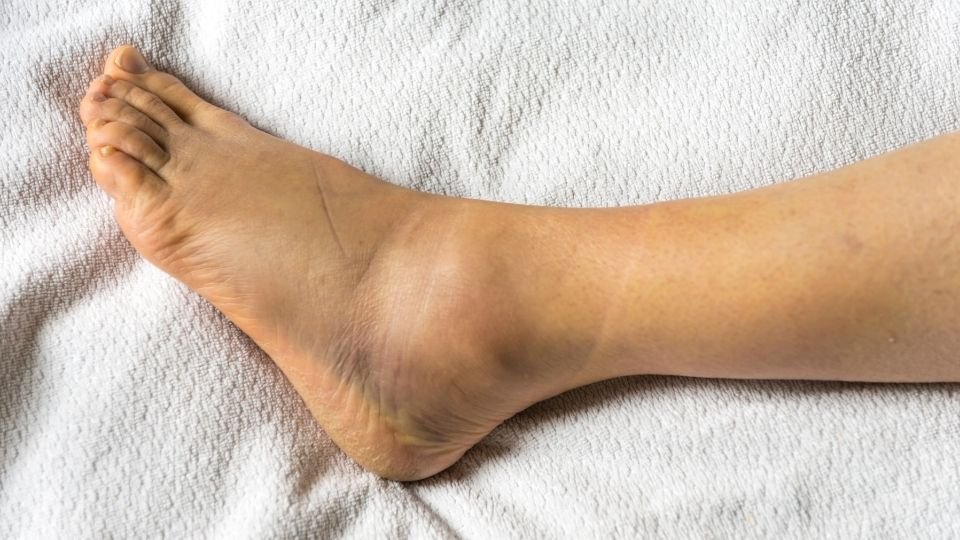
When you sprain your ankle, ligaments tear. These are the tough bands of tissue that hold your ankle bones together and tell your brain exactly where your foot is in space. When they’re damaged, your ankle doesn’t just lose strength — it loses its GPS system.
Most people think healing means the swelling goes down and the pain fades. But here’s what’s actually happening inside that ankle: Your proprioception (your ankle’s ability to sense position and movement) is severely compromised. The neural pathways that once kept you balanced are now firing incorrectly. Your muscles are compensating in ways that create imbalances up your entire leg.
The scary part? Studies show that up to 40% of people who sprain their ankle once will sprain it again within a year. And each subsequent injury makes the joint progressively weaker and more unstable.
What Happens When You Skip Rehabilitation
Think your ankle “healed” because you can walk without pain after three weeks? Your body is a master compensator. You’ve likely developed a subtle limp, started putting more weight on your other leg, and unconsciously avoid certain movements. These adaptations feel normal — but they’re quietly destroying your joint health.
Here’s the cascade effect of inadequate ankle sprain recovery:
Week 1-3: You rest. Swelling decreases. Pain becomes manageable. You feel “better.”
Month 1-2: You return to normal activities, but your ankle isn’t actually normal. Ligaments have healed shorter and tighter, or longer and looser. Your balance is off by microseconds — unnoticeable to you, catastrophic for stability.
Month 3-12: You roll it again. Maybe on the same curb. Maybe playing basketball. Maybe just walking on uneven ground. Because your ankle never regained its original strength, coordination, or proprioception, it was a disaster waiting to happen.
Years later: You’re dealing with chronic ankle instability, early-onset arthritis, compensatory knee or hip pain, and a lingering fear every time you step on anything other than flat pavement.
Enter Physiotherapy: Your Ankle’s Actual Lifeline
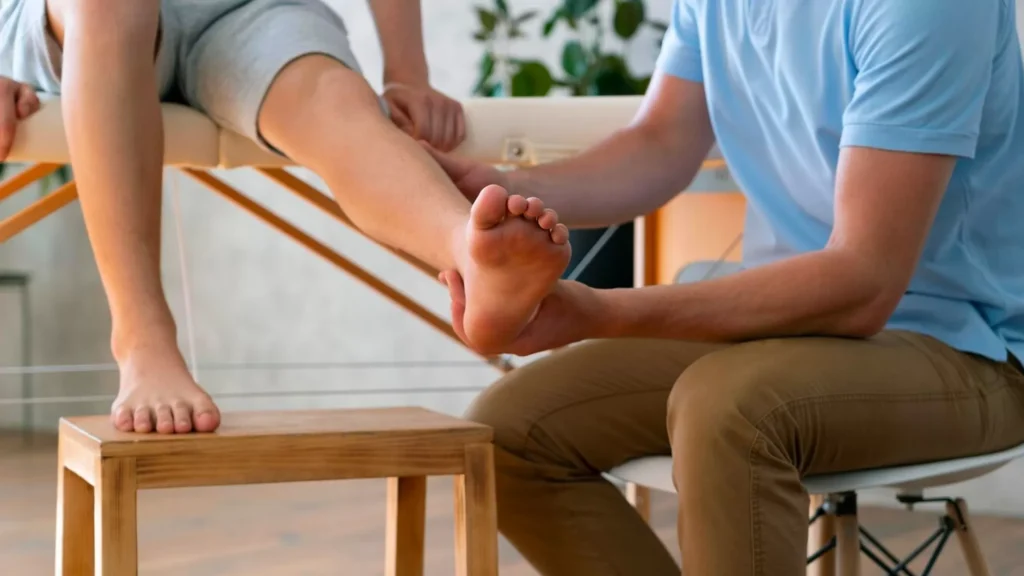
This is where ankle sprain recovery physiotherapy becomes non-negotiable. A physiotherapist doesn’t just help your ankle heal — they retrain your entire neuromuscular system to prevent the injury from happening again.
Professional rehabilitation targets three critical areas that rest alone cannot address:
Proprioceptive retraining is perhaps the most crucial element. Your physiotherapist will guide you through balance exercises on unstable surfaces, single-leg stands, and movement patterns that force your ankle to relearn spatial awareness. These exercises literally rewire the neural connections between your ankle and brain.
Strength restoration goes beyond just “getting stronger.” Targeted exercises rebuild the specific muscles that stabilize your ankle — your peroneals, tibialis posterior, and intrinsic foot muscles. These aren’t muscles you can effectively train by just “walking more.”
Range of motion and flexibility work ensures your ankle heals with optimal mobility. Without guided stretching and joint mobilization, scar tissue can form in ways that permanently restrict your movement and increase re-injury risk.
The Physiotherapy Timeline: What Actually Works
proper ankle sprain recovery physiotherapy program typically spans 6-12 weeks, progressing through specific phases:
Acute Phase (Week 1-2): Your physiotherapist manages swelling and pain while maintaining safe range of motion. This isn’t passive rest — it’s active recovery with controlled movement that promotes healing without further damage.
Rehabilitation Phase (Week 3-6): Progressive strengthening begins. You’ll do resistance exercises, start balance training, and work on gait mechanics. This phase is where most people who “rest only” fail to venture.
Return to Function Phase (Week 7-12): Sport-specific or activity-specific training ensures you can safely return to whatever you love doing — running, dancing, hiking, or simply walking confidently on any terrain.
The Real Cost of Doing Nothing
Consider this: The average person spends 8-12 sessions over 2-3 months in physiotherapy after an ankle sprain. Compare that to a lifetime of chronic instability, multiple re-injuries, expensive imaging and possible surgical interventions, lost productivity and activity restriction, and progressive joint degeneration.
Your Ankle Is Talking — Are You Listening?
That slight hesitation when you step off a curb? That’s your ankle telling you it’s not fully healed. The way you unconsciously favor your other leg? That’s compensation for instability you haven’t addressed. The occasional twinge when you twist? That’s a warning that re-injury is around the corner.
Your ankle doesn’t need more rest. It needs rehabilitation, retraining, and the expert guidance that only ankle sprain recovery physiotherapy can provide.
Take Action Before Your Next Sprain
never quite felt “right” again — the time to act is now. Not next month. Not after you “see how it goes.” Now.
Book an assessment with a qualified physiotherapist who specializes in ankle rehabilitation. They’ll evaluate your proprioception, strength, range of motion, and movement patterns, then create a personalized recovery plan that actually addresses the root problem.
Because here’s the final truth: Every day you wait is another day your ankle is learning to be unstable. And relearning bad patterns is much harder than learning proper ones from the start.
Your future self — the one confidently running, jumping, and moving without fear — will thank you for not just resting.